Prime Minister Sanae Takaichi told a parliamentary committee on October 19 that the new disaster management agency should help municipalities obtain support smoothly across ministries.
Typhoon 30 was east of the Philippines on October 19. At noon, Japan's weather agency classified it as large and very strong, with a central pressure of 945 hPa.
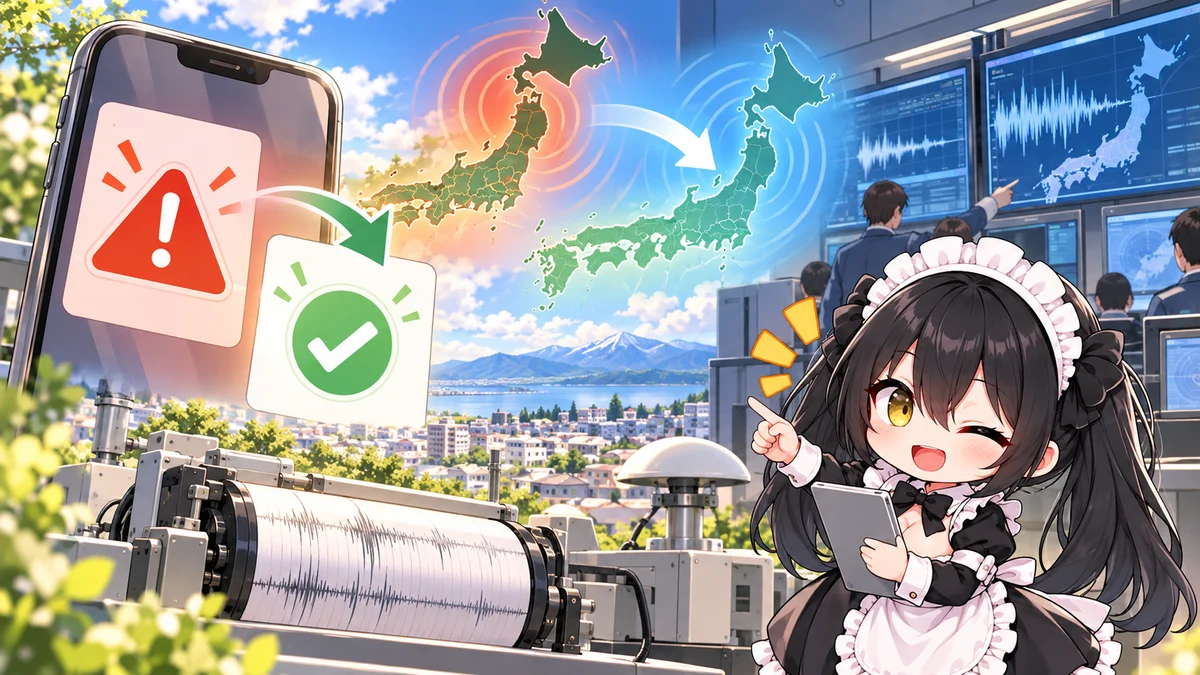
An earthquake early warning covering Hokkaido through Tokai and other areas was cancelled around midday October 16. At its second news conference, JMA cited errors in calculations predicting magnitude and intensity.
Firefighters in Tomigusuku tested a system developed by NIED and others that overlays pre-disaster 3D buildings on tablet views and records damage by voice. Several teams registered information simultaneously.
The Maritime Self-Defense Force's Okinawa base agreed cooperation with NTT Docomo, Okinawa Cellular, SoftBank and Rakuten Mobile for communications restoration after disasters, including island damage and blocked roads.
JMA's October 13 early weather outlook indicated a possibility of markedly above-normal temperatures from around October 19, from Pacific-side Hokkaido through Kinki and in Okinawa, including Tohoku, Kanto-Koshin, Hokuriku and Tokai.
 Illustration